Closer at Teatro Ambra Jovinelli, November 11 to 22, 2026
In short. Practical dossier on Closer at Teatro Ambra Jovinelli. Patrick Marber's "Closer", directed by Fabrizio Coniglio, is on stage at Teatro Ambra Jovinelli from November 11 to 22, 2026.
Practical dossier on Closer at Teatro Ambra Jovinelli. Patrick Marber's "Closer", directed by Fabrizio Coniglio, is on stage at Teatro Ambra Jovinelli from November 11 to 22, 2026. On stage are Paolo Kessisoglu, Roberta Caronia, Alessandro Averone and Yeva Sai, and the production is by CMC/Nidodiragno. The official calendar has 12 performances: Wednesday, November 11 at 21:00, Thursday the 12th at 19:30, Friday the 13th at 21:00, Saturday the 14th at 16:30 and 21:00, Sunday the 15th at 17:00, Tuesday the 17th at 21:00, Wednesday the 18th at 19:30, Thursday the 19th at 21:00, Friday the 20th at 19:30, Saturday the 21st at 21:00, Sunday the 22nd at 17:00. The theater is at Via Guglielmo Pepe 45, 00185 Rome, in the Esquilino district. The show's page doesn't give specific prices. The general season price list published by the theater runs from 19 to 39 euros on Friday, Saturday evening and Sunday, and from 17 to 35 euros Tuesday to Thursday and at the Saturday afternoon performance. The length isn't published. Tickets are sold at the box office at Via Guglielmo Pepe 45 (phone 06 83082620) or online through the buy button on the official page on ambrajovinelli.org. To get there by public transportation, use the ATAC journey planner: the theater is a short walk from Piazza Vittorio Emanuele II.
Language: performed in Italian. No English version or English surtitles are announced.

Closer: four strangers and a dangerous game
At the center of "Closer" the lives of four people who don't know each other intertwine: a journalist who writes obituaries, a stripper, a dermatologist and a photographer. Their destinies meet and clash in a game of seduction, betrayal and the search for truth that stretches over several years. Teatro Ambra Jovinelli presents it as a ruthless and magnetic anatomy of modern romantic relationships, a true manifesto of an entire generation.
The text moves through short scenes and tight, cutting dialogue, with a modernity that almost 30 years after its first performance hasn't worn out. The official presentation stresses that it isn't just a comedy about relationships but a psychological drama that digs into the desire to possess and the inability to be authentic with the other.
The meaning of the title
The title is a single word, and it contains the whole show. Closer means nearer: it's the extreme closeness between two people, the one that should be the destination of every love story. The paradox Marber explores, the theater notes, is that this very closeness often ends up driving us irreparably away from the person we love. The line between love and obsession becomes thin.
The director's notes
Fabrizio Coniglio, in the notes published on the show's page, sees the same difficulty in the four protagonists: none of them really manages to love, or wants to see the other for who they are. The partner becomes a tool for confirming one's own insecurities, and often the loved one serves to take revenge on the previous one. Only Alice, the youngest and, according to the director, the true victim of the game, seems to come close to a serene surrender. Coniglio insists that the text is neither rhetorical nor sentimental: the dialogue describes the individualistic cage in which whole generations remain trapped.
The plot, without giving away the ending
It all begins in a London hospital. Dan, a failed novelist who makes a living writing obituaries, takes a girl hit by a taxi to the emergency room. Her name is Alice, she has a scar on her leg and a past as a stripper. The doctor who briefly examines her is Larry, a dermatologist. More than a year later Dan is about to publish a book inspired by the life of Alice, with whom he lives, and he sits for the photographer Anna. He falls for her immediately.
A chat room prank
One of the most famous moments of the text is a scene in an erotic chat room: Dan pretends to be Anna and sets up a date with Larry at the London aquarium, thinking he's playing a joke on him. But at the aquarium, by chance, Anna is really there. From that misunderstanding a new relationship is born, and the square of feelings closes.
The couples game
Over the years couples form, betray each other, swap. Every truth spoken becomes a weapon, every lie a refuge. The structure of time jumps lets Marber show only the turning points, leaving the audience to imagine what happens in between. The ending, which we won't give away here, closes the circle with a revelation about the identity of one of the characters.
The four characters
Marber builds the text on a rigorous geometry: two men, two women, four professions all having to do with looking and with truth. The obituary writer tells other people's lives when they're over, the stripper shows her body but hides her identity, the dermatologist observes the surface of the skin, the photographer fixes faces at the moment they're most vulnerable.
Dan
Daniel Woolf writes obituaries for a newspaper and nurses the ambition of becoming a novelist. In the first scene he ironically describes the euphemisms he and his colleagues use in obituaries. He's the engine of the story: his attraction to Anna sets all the other events in motion, and his inability to accept an uncomfortable truth seals the fate of the couple he forms with Alice.
Alice
Alice describes herself as a girl without roots, with a question-mark-shaped scar on her leg. In the director's notes, she's the true victim of the game, the only one who seems capable of sincere surrender. Her name, and the mystery surrounding it, are one of the keys to the ending.
Larry
Larry is a dermatologist, the most direct and brutal character of the quartet. In the text he's the one who calls things by their name and uses truth like a club. The aquarium scene turns him from the victim of a prank into the protagonist of an unexpected relationship.
Anna
Anna is an established photographer. Her pictures, shown in an exhibition halfway through the text, become the place where all the characters meet and recognize each other. She's torn between two men and two ways of loving, one made of passion and one of stability.
Patrick Marber, the author
Patrick Marber was born in London on September 19, 1964. Before writing for the theater he worked as a stand-up comedian. His first play, "Dealer's Choice", known in Italy as "La scelta del mazziere", was written in 1995 for the National Theatre and directed by the author himself. It won him the Evening Standard Award for best comedy. The same award came in 1997 with "Closer", again produced by the National Theatre and directed by Marber.
From stage to screen
Marber wrote the screenplay for the film adaptation of "Closer" and earned an Oscar nomination for the adapted screenplay of "Notes on a Scandal". He reworked Strindberg's "Miss Julie" for television and the stage under the title "After Miss Julie", setting it in 1945 England, and staged "Don Juan in Soho", inspired by Molière.
The Tony Award
In 2023 Marber won the Tony Award for best direction of a play with Tom Stoppard's "Leopoldstadt", confirming a career in which he's now equally admired as director and as author.
The history of Closer: from London to Broadway
"Closer" premiered on May 22, 1997 at the Cottesloe Theatre of the Royal National Theatre in London. It was Marber's second original play. The first cast included Clive Owen as Dan, Liza Walker as Alice and Ciarán Hinds as Larry. After the first run the show moved to the Lyttelton, another National hall, with some cast changes.
The awards
The play won the Evening Standard Award for best comedy in 1997 and the Laurence Olivier Award for best new play in 1998. In the United States it won the New York Drama Critics' Circle Award for best foreign play and the Drama Desk Award in 1999, as well as a Tony Award nomination.
Broadway and revivals
On Broadway "Closer" was staged at the Music Box Theatre in 1999 and ran for 172 performances. In 2015 David Leveaux directed a new production at the Donmar Warehouse in London, a sign that the play has entered the contemporary repertoire.
Mike Nichols's film
In 2004 Marber adapted the text for the film of the same name directed by Mike Nichols, with Julia Roberts, Jude Law, Natalie Portman and Clive Owen. The film made the story known to a much wider public, and many in the audience will come to the hall with those images in mind.
Closer in Italy
It's not the first time the play has reached Italian stages. In the 2000/2001 season Fox and Gould Produzioni staged it directed by Luca Guadagnino with a cast of Gianmarco Tognazzi, Claudia Gerini, Bruno Armando and Alessandra Acciai. Sets were by Paolo Polli, costumes by Alessandro Lai, lighting by Raffaele Perin and original music by Walter Fasano. A quarter of a century later, the new CMC/Nidodiragno production brings the text back to an audience that has meanwhile changed the way it lives relationships, also through the digital tools Marber anticipated in 1997 with the chat room scene.
Writing that anticipates
In 1997 an erotic chat room was an almost exotic idea for theater audiences. Today it's a common experience, and the aquarium scene sounds more current than ever. It's one of the reasons the play keeps being staged: it tells of loneliness that technology has multiplied instead of curing.
Paolo Kessisoglu and the return to drama
According to the theater's presentation, the show marks Paolo Kessisoglu's long-awaited return to spoken drama, with a role of real dramatic depth. Born in Genoa on July 25, 1969 to a family of Armenian origin, Kessisoglu started out as a guitarist, playing in his city's jazz clubs at 13. In 1991, during some auditions, he met Luca Bizzarri: together they were part of the group Cavalli Marci, and since 1998 they have been the duo Luca e Paolo.
A family in flight
The surname tells a story. His paternal grandfather, Callisto, was an Armenian refugee from Smyrna who escaped the genocide as a child. The original surname, Keshishian, was changed to Keşişoğlu, then Hellenized and finally Italianized on arrival in Italy. Kessisoglu has worked for years to keep alive the memory of the Armenian massacre.
Television and film
The general public knows him for hosting "Le Iene", for the role of Paolo Bitta in "Camera Café" and for films such as "E allora mambo!" and "...e se domani", which in 2005 won him and Bizzarri the best actor award at the Annecy Italian Film Festival. A calendar curiosity: a few days before the debut of "Closer", on October 29 and 30, the same stage hosts Luca Bizzarri with Non hanno un dubbio.
From TV comedy to drama
Kessisoglu's career has also included programs such as "MTV Trip", in which the duo toured Italy in a hearse, "Mai dire Gol" and the 2007 sitcom "La strana coppia", inspired by Neil Simon's The Odd Couple. In our view, familiarity with comic timing can become an asset in a text like "Closer", where the cruelty of the dialogue often comes through in lightning-fast lines.
Roberta Caronia, Alessandro Averone and Yeva Sai
Roberta Caronia was born in Palermo on July 9, 1980 and graduated in 2002 from the Accademia Nazionale d'Arte Drammatica Silvio d'Amico. She won the Premio Asso-Stampa Teatro in 2009 for her Antigone in "Oedipus at Colonus", the Premio Virginia Reiter in 2017, the Premio Duse in 2018 and the ANCT theater critics' award in 2020. The theater presents her as one of the most awarded and respected actresses on the national stage.
Alessandro Averone
Alessandro Averone is described by the official presentation as an actor with solid international training, chosen for his interpretive rigor. With Kessisoglu he completes the male side of the quartet.
Yeva Sai, the debut
Yeva Sai is the youngest in the company. TV audiences know her from the series "Mare Fuori", and "Closer" marks her stage debut. The theater's page doesn't give the casting, but with two female characters, a girl and an adult woman, the audience will be able to guess the pairings.
Fabrizio Coniglio's direction
Direction is by Fabrizio Coniglio. The photo credit for the official images is Laila Pozzo. Sets, costumes, lighting and translation aren't listed on the show's page.
Practical information
The general 2026/27 season price list published in the theater's box office section gives, on Friday, Saturday evening and Sunday, 39 euros in the poltronissima (front orchestra), 34 in the poltrona (orchestra), 28 in the first gallery, 25 in the first gallery stools, 22 in the second gallery and 19 in the second gallery stools. Tuesday to Thursday and at the Saturday 16:30 performance prices drop to 35, 30, 25, 22, 19 and 17 euros. The "Closer" page doesn't give its own prices: if in doubt, ask the box office.
The gallery stools
The name is misleading: the gallery stools, the theater explains, are raised seats with backrests and footrests, designed to offer a more comfortable view. Those in the second gallery go on sale only after the show's debut, for technical reasons.
Box office and groups
On performance days the box office opens an hour before the start, only for sales of that day's show. The full winter hours aren't published on the box office page. For groups, CRALs and schools there's the Promotion Office, at 06 88816460 or promozione@ambrajovinelli.org.
Parking and accessibility
The affiliated garage is the Multipiano Es Park Giolitti, at Via Giovanni Giolitti 267, about 200 meters from the theater: after the show, ask the house staff for a voucher to get the discount. In the foyer two elevators reach all floors. Digital tickets don't need to be printed.
The Esquilino around the theater
The Ambra Jovinelli is in one of Rome's most varied districts, born largely with the master plan after 1870 to house the employees of the new capital's ministries. A few steps away opens Piazza Vittorio Emanuele II, with the remains of the nymphaeum known as the Trophies of Marius and the Alchemical Door, built between 1655 and 1681 by the Marquis Massimiliano Savelli Palombara in his villa.
Markets, churches and ancient gardens
The district has the Nuovo Mercato Esquilino, the church of Sant'Eusebio and the Auditorium of Maecenas, a remnant of the ancient gardens of Augustus's adviser. For a full itinerary there's our page Esquilino: what to see.
Before the show: two great museums and a basilica
If you reach the Esquilino in the afternoon, especially for the weekend performances, some of the most important places of ancient and Christian Rome are at hand. A short distance away are the basilica of Santa Maria Maggiore and Palazzo Massimo alle Terme, one of the sites of the Museo Nazionale Romano. A museum visit followed by the evening show makes a well-balanced day between ancient and contemporary, without needing public transportation.
A square to cross
Piazza Vittorio, with its arcades and large central garden, is the natural passage between the metro and the theater. In the evening it's lively and busy: crossing it before going in is the best way to get into the spirit of the district.
A curious fact about Teatro Ambra Jovinelli
The word Ambra in the theater's name has no poetic meaning. When in the 1950s the Jovinelli was turned into a cinema-variety house, the managers added that name for a practical reason: in the newspaper listings, the columns that listed movie theaters in alphabetical order, a name starting with A would appear at the very top. A marketing choice ahead of its time that gave the theater the name it's still known by today.
Rome's only Liberty-style theater
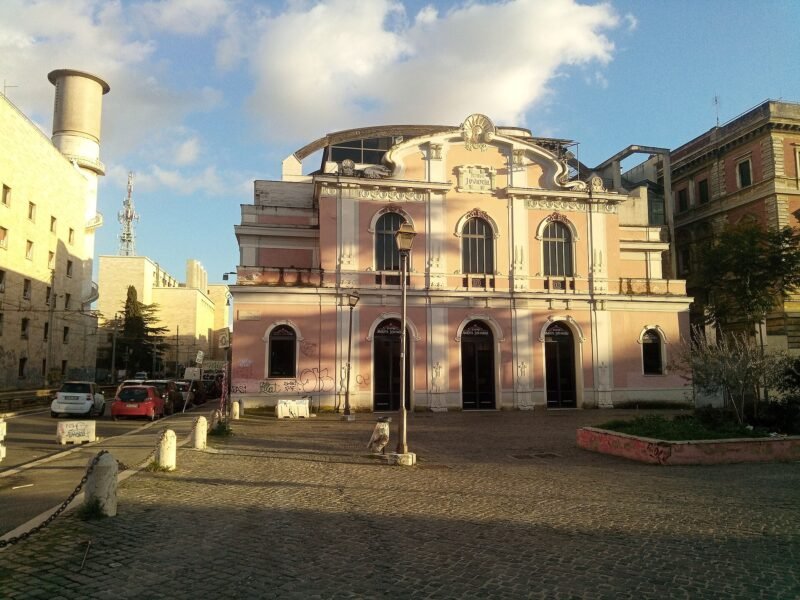
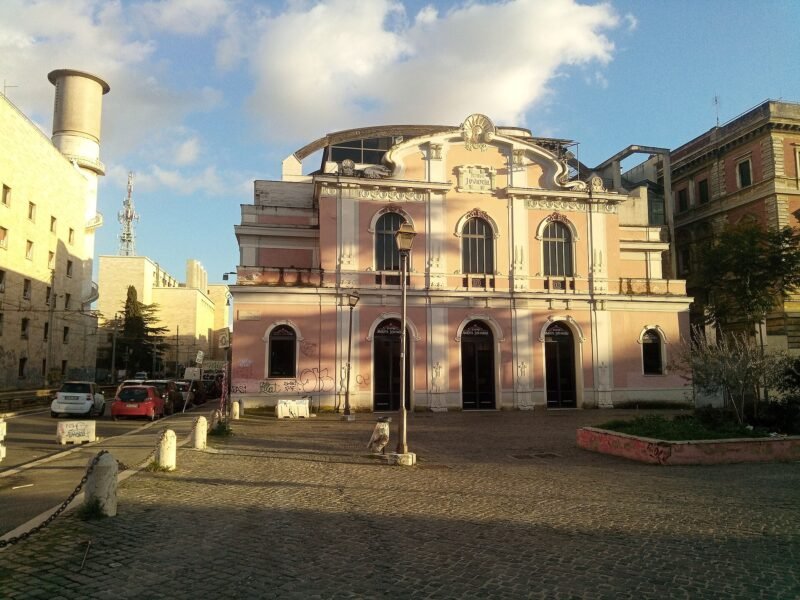
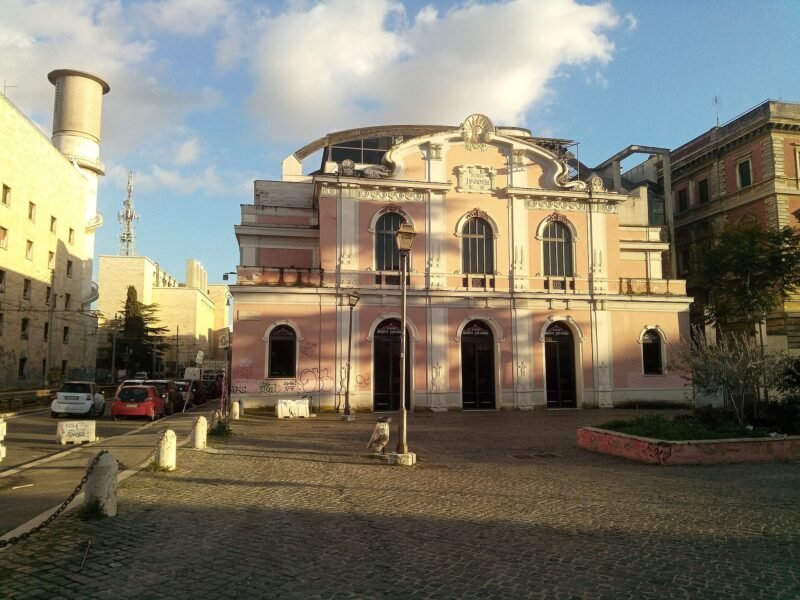
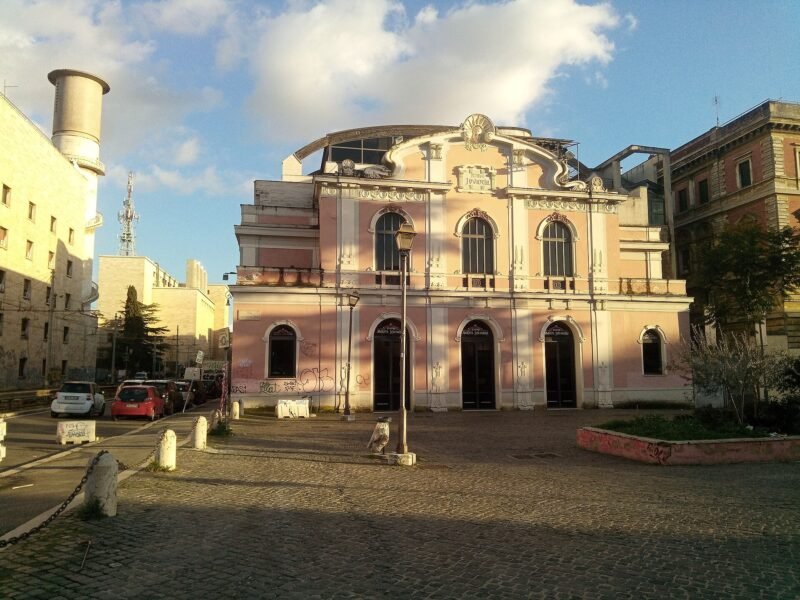
The building, inaugurated on March 3, 1909, is considered the only theater in Rome built in the Liberty (Art Nouveau) style. On the original facade there were two plaster eagles and, in the middle of the wavy entablature, a shell with a human face. On the proscenium arch the plaque "G. Jovinelli, 1909" is still visible.
Something nobody tells you about Teatro Ambra Jovinelli
In the 1940s and 1950s the Jovinelli was also a kind of sports arena. It hosted a great many boxing meets, with a ring set up in the hall and great champions fighting in front of a large crowd of fans, at a time when boxing was among the most followed sports. The sports press of the time gave the initiative great prominence. Imagining a ring where Marber is performed today is a way to measure how many lives this hall has had.
The forgotten ticket
A practical detail: if you forget or lose your ticket, you can go to the box office with ID and get a reprint for 50 cents. The ticket can also be passed on to someone else without changing the name.
My advice for visiting Teatro Ambra Jovinelli
My advice is to choose one of the 19:30 performances, Thursday the 12th, Wednesday the 18th or Friday, November 20. The time lets you leave the theater in time for dinner at the restaurants of the Esquilino, a district where you'll find cuisines from many countries a few steps apart. If you want to save, the Saturday the 14th performance at 16:30 falls into the lowest price band of the general list.
To rewatch the film or not
If you loved Mike Nichols's film, don't rewatch it the night before. The stage gives the text back its original form, made of isolated scenes and silences, and comparing it with the film's images risks distracting you from the four actors' performances.
Another well-known fact, yet one that is rarely mentioned
It's well known that Totò started at the Jovinelli. Less well known is how: between 1919 and 1920 the young Antonio de Curtis presented himself as an impersonator of Gustavo De Marco, a comedian who had had enormous success on that very stage before the war. He immediately became an audience favorite and stayed until 1921. Years later he told of his meeting with impresario Giuseppe Jovinelli in the book "Siamo uomini o caporali?".
Petrolini and Viviani
Before him, Raffaele Viviani had been engaged with his sister Luisella for the 1909 inauguration, and Ettore Petrolini got his first important contract from Jovinelli himself, in 1910.
The right photo to take at Teatro Ambra Jovinelli
The Liberty facade, restored and under heritage protection since 1997, is the ideal subject. From the opposite sidewalk you can frame the two-story central section with its large openings and curved crowning. In the evening, with the sign lit and the audience coming and going, the photo captures the theater's popular character well.
In the hall
Before the show it's worth looking up at the proscenium arch to find the 1909 plaque and observe the original cast-iron columns, restored and now supporting the galleries.
Some important events that happened here in history
The history of the Ambra Jovinelli, also reconstructed by the theater's website, spans the whole of Rome's 20th century.
1906-1909: construction
The impresario Giuseppe Jovinelli, from Caserta, wanted a luxurious variety theater, worthy of a drama theater. After designs by Pietro Chiodelli and Giacomo Radiconcini, work began in 1906 and the following year Ulderico Bencivenga took over. The inauguration took place on March 3, 1909, with over 600 seats in the orchestra and about a thousand seats in all.
April 29, 1982: the fire
After the years as an adult movie theater, a fire caused by a technical fault destroyed the entire structure. Closure and abandonment followed. In 1990 the building was bought by a Milan company.
1996-2001: rebirth
In July 1996 a group of young artists and intellectuals organized shows and exhibitions in the ruined building to draw attention to it. In 1997 the facade was placed under protection by the Ministry. After restoration, on January 25, 2001 the theater reopened as a comedy theater with Serena Dandini as artistic director.
December 26, 2010: the current management
After another closure from June 2009, the theater reopened on December 26, 2010 with Fabrizia Pompilio as artistic director, who has brought it back among the reference points of national theater.
Who has passed through Teatro Ambra Jovinelli
In the Jovinelli family era, besides Totò, Petrolini and Viviani, Gennaro Pasquariello, Romolo Balzani, Claudio Villa, Nino Taranto, Lino Banfi, Franco Franchi and Ciccio Ingrassia, Rita Pavone and Alberto Sordi passed through here. After the 2001 reopening the stage welcomed Ascanio Celestini, Marco Paolini, Lillo e Greg, Corrado and Sabina Guzzanti, Vincenzo Salemme, Lella Costa, Moni Ovadia and Nicola Piovani. Since 2010, among others, Stefano Accorsi, Ferzan Özpetek, Pierfrancesco Favino, Paola Cortellesi, Valerio Mastandrea, Elio Germano, Silvio Orlando and Filippo Timi have come. The theater is especially linked to the writer Mattia Torre.
The 2026/27 season
The current program includes, among others, Ferzan Özpetek's "Ruoli secondari", Educazione sentimentale with Giuseppe Fiorello and Paolo Genovese's "Perfetti sconosciuti".
Frequently asked questions about Closer at Teatro Ambra Jovinelli
When is Closer on at the Ambra Jovinelli?
From November 11 to 22, 2026, with 12 performances. Evening shows are at 21:00 on Wednesday the 11th, Friday the 13th, Tuesday the 17th, Thursday the 19th and Saturday the 21st. Performances are at 19:30 on Thursday the 12th, Wednesday the 18th and Friday the 20th. On Saturday the 14th there are two performances, at 16:30 and 21:00, while Sundays the 15th and 22nd start at 17:00.
How much is a ticket?
The show's page doesn't give its own prices. The theater's general season price list runs from 19 to 39 euros on Friday, Saturday evening and Sunday, and from 17 to 35 euros Tuesday to Thursday and at the Saturday afternoon performance, depending on the section. For confirmation on the specific show, contact the box office at 06 83082620.
Who are the actors?
On stage are Paolo Kessisoglu, returning to spoken drama, Roberta Caronia, Alessandro Averone and Yeva Sai, an actress from the series Mare Fuori making her stage debut here. Direction is by Fabrizio Coniglio, production by CMC/Nidodiragno. The theater's page doesn't say which character each actor of the quartet plays.
Is it the same Closer as the Julia Roberts film?
Yes, the text is the same. "Closer" was born as a play by Patrick Marber, first performed in London in 1997. In 2004 Marber himself adapted it for the film directed by Mike Nichols with Julia Roberts, Jude Law, Natalie Portman and Clive Owen. On stage the story keeps its original structure of short scenes and time jumps.
Is the show suitable for teens?
The theater gives no recommended age or content warnings. The text, however, deals explicitly with themes like betrayal, sexuality and jealousy, with direct and at times raw dialogue, and one of the protagonists is a stripper. It's a choice to weigh for a very young audience.
How long is it?
The length isn't published on the show's page, which doesn't say if there's an intermission either. If you need to plan your trip home, especially for the 21:00 performances, you can ask the theater's info line, at 06 83082620 and 06 83082884, in the days before your chosen date.
Where can you park?
The theater has an agreement with the Multipiano Es Park Giolitti at Via Giovanni Giolitti 267, about 200 meters away. To get the discount, ask the house staff for a voucher after the show. The agreement is valid for the current season. Alternatively, the area is served by the public transportation that converges on Termini and Piazza Vittorio.
What is the history of the theater hosting the show?
The Ambra Jovinelli was inaugurated on March 3, 1909 as a variety theater by impresario Giuseppe Jovinelli and is considered Rome's only Liberty-style theater. Totò made his debut here and Petrolini and Viviani passed through. It then became a movie theater, a boxing hall and an adult movie theater. Destroyed by fire in 1982, it was reborn in 2001 as a theater of auteur comedy.
Final advice on Closer at Teatro Ambra Jovinelli
"Closer" is one of the most performed plays of contemporary English theater, and its strength lies in the surgical precision of its dialogue. Seeing it at the Ambra Jovinelli, a theater born for variety and in recent years the home of auteur comedy, adds an element of curiosity: the dramatic test of an actor like Paolo Kessisoglu, known mainly for comedy, alongside a much-awarded performer like Roberta Caronia and a young actress on her first stage. Choose your date based on the price band and the time, keeping in mind that the 19:30 performances are the most convenient if you want to have dinner afterward. For the best seats in the poltronissima, however, move in the days before the November 11 debut. For the rest of the program there's our page on Teatro Ambra Jovinelli. If you're coming from outside Rome, you can take advantage of the nearness of Termini station, which you can walk to from the theater across the Esquilino, to plan your trip there and back without depending on a car.
Article written by the editorial team of Tour Leader Pro, contact them for Private/Corporate/V.I.P. Tours and Experiences.
Planning a trip to Rome? The English guides for visiting the city are on ItalyPlanner.com.
Contact Information
Nearby
 Teatro Ambra Jovinelli100 m
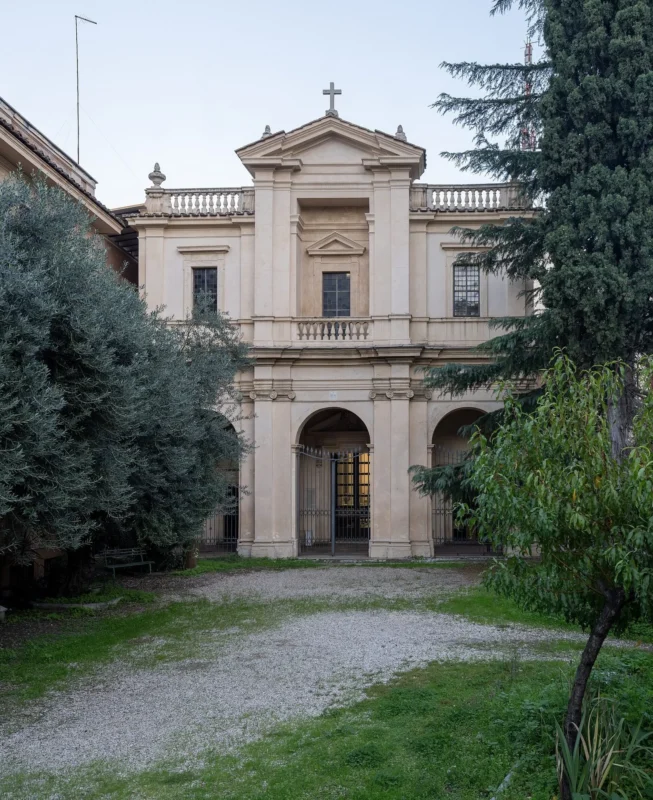
- Santa Bibiana100 m
- Nuovo Mercato Esquilino100 m
- Underdog’s200 m
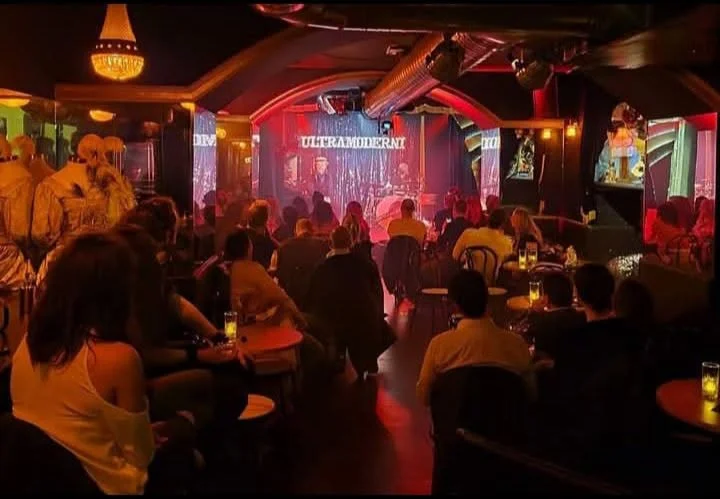
- La Conventicola degli Ultramoderni200 m
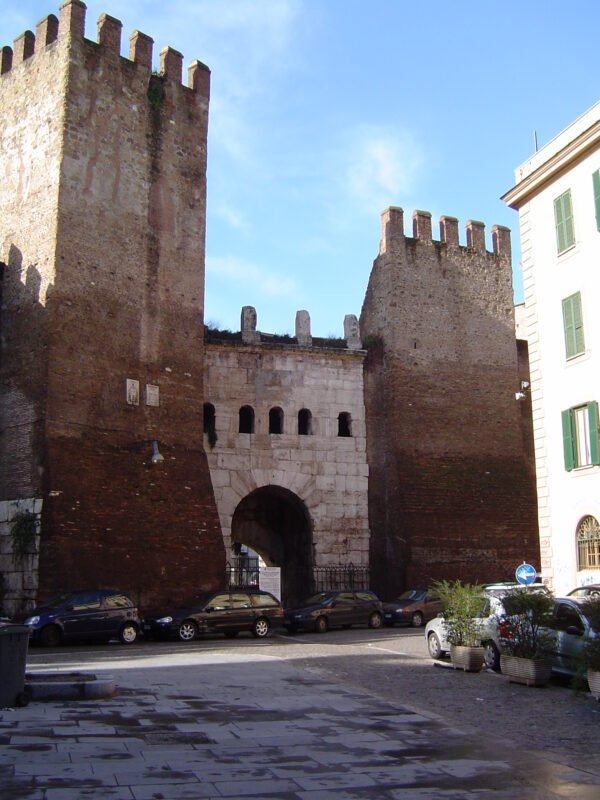
- Porta Tiburtina300 m

Upcoming events nearby
- La cosa giusta with Dino Abbrescia and Massimo De Lorenzo at the Ambra Jovinelli, January 13-24, 2027100 m
- Le nostre donne with Luca Bizzarri at Teatro Ambra Jovinelli, March 10 to 21, 2027100 m
- Incendi with Frédérique Loliée and Filippo Dini at Ambra Jovinelli, January 27 to February 7, 2027100 m
- Andrea Scanzi, Ora o mai più at Ambra Jovinelli, March 23, 2027100 m
You might also like
- Marco Goldin, Monet. Una vita a colori at Teatro Brancaccio, November 23, 2026
- Arriva Lucilla at Teatro Brancaccio, November 22, 2026
- Le ultime lune with Alessandro Haber at Teatro Ambra Jovinelli, November 25 to December 6, 2026
- Citofonare Casa Imbarazzi with Mandrake at Teatro Brancaccio, November 18, 2026
- Pierluca Mariti in Abbi pazienza at Teatro Ambra Jovinelli, March 9, May 17 and October 5 to 10, 2027
- Michela Giraud in Fisicamente mi piacciono tutti! at Teatro Brancaccio, March 7, 8 and 9, 2027