Antonio Scurati in Democrazia: storie di donne e uomini at the Auditorium Parco della Musica, December 21, 2026
In short. Antonio Scurati stages Democrazia: storie di donne e uomini on Monday, December 21, 2026 at 8:00 p.m.
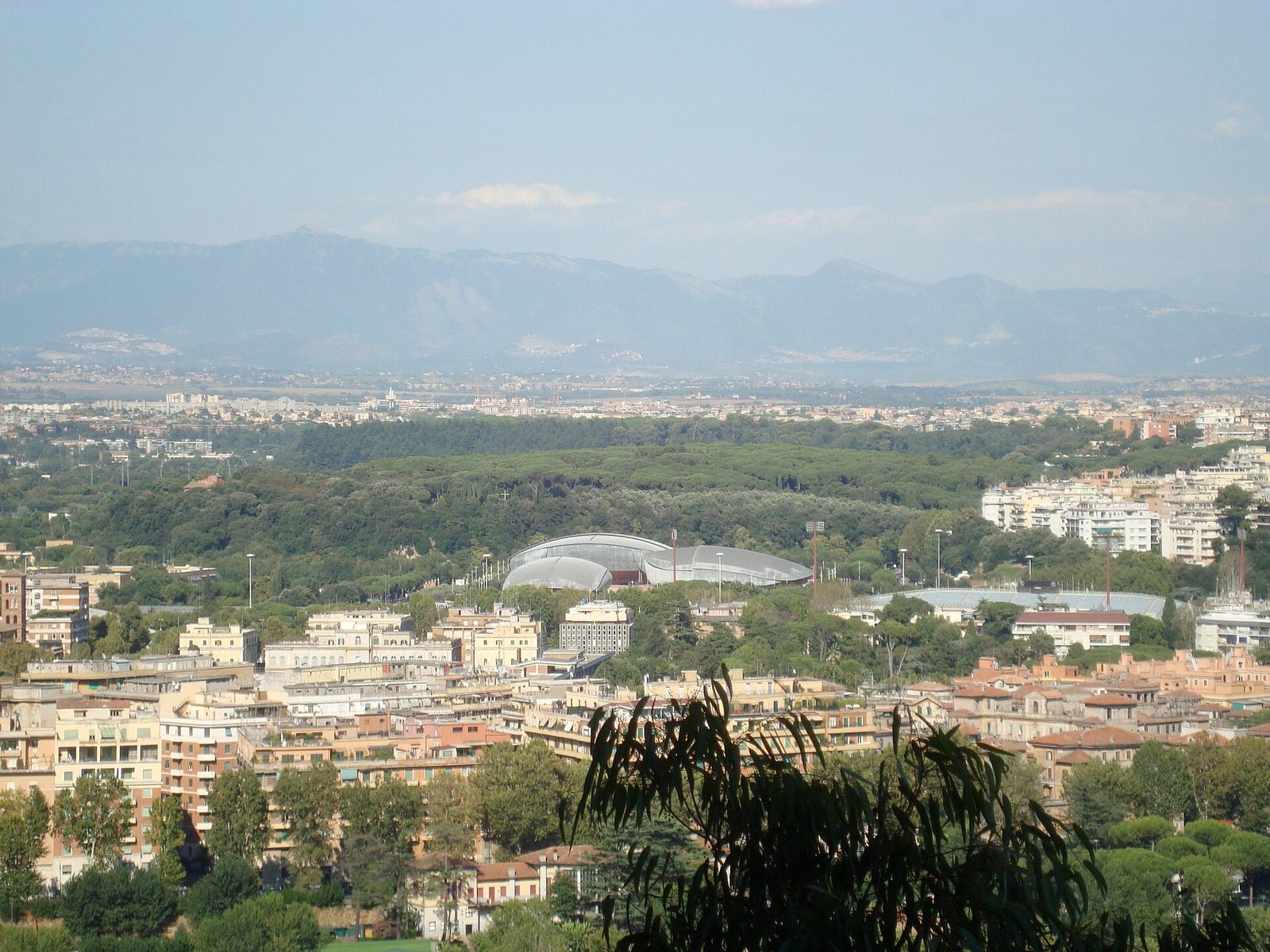
Antonio Scurati stages Democrazia: storie di donne e uomini on Monday, December 21, 2026 at 8:00 p.m. in the Sala Santa Cecilia of the Auditorium Parco della Musica Ennio Morricone, at viale Pietro de Coubertin 30 (00196 Rome). You get there by Metro A to Flaminio and then tram 2 (stops Flaminia/Reni or Apollodoro), or by bus 910 from Termini. Tickets start at 34.50 euros, according to the Auditorium's official page, and are bought on the venue's official website, which links to the presale circuit authorized by the organization, or at the complex's box office.
Language: performed in Italian. No English version or English surtitles are announced.
It's a theatrical show that crosses history and the present giving voice to women and men who, in different eras, fought to win and defend democracy and civil rights in Europe. The narrating voices are those of the writer, Strega Prize 2019 winner with M. Il figlio del secolo, and of Benedetta Cimatti, the direction is by Lorenzo Scurati, the music is composed and performed live by Rodrigo D'Erasmo and Mario Conte. The show is in the largest hall of Renzo Piano's complex.
Antonio Scurati in Rome: date, time, hall and tickets
Democrazia: storie di donne e uomini is scheduled for Monday, December 21, 2026 at 8:00 p.m. in the Sala Santa Cecilia, according to the official page of the Auditorium Parco della Musica Ennio Morricone, which places it in the theater programming of the Fondazione Musica per Roma.
When
Monday, December 21, 2026, at 8:00 p.m. It's a one-off date, four days before Christmas, on a weeknight.
The price
The event page indicates tickets starting from 34.50 euros. The higher tiers depend on the hall section and appear on the seat map at the time of purchase: in a hall of about 2,750 seats the differences between stalls and upper sections are significant.
Where to buy
The purchase button on the Auditorium's official website leads to the authorized presale circuit. The complex's box office, at viale Pietro de Coubertin 30, is open from October to March from 11 a.m. to 8 p.m., also on Sundays and holidays. The rules warn that tickets bought on unauthorized platforms may not be valid.
Democrazia: what you see on stage
Democrazia: storie di donne e uomini is, according to the official presentation, an epic civic fresco: monologues and choral tableaux that tell of heroines and heroes of stubborn democratic fidelity, in a story that questions the present and calls to the collective responsibility of never taking freedom for granted.
Monologues and choral tableaux
The stage, says the presentation, becomes a place of memory and conflict, where individual courage clashes with the violence of power. Democracy becomes an embodied experience, fragile and concrete, safeguarded by exposed bodies.
The voices
The narrating voices are Antonio Scurati and Benedetta Cimatti. The direction is signed by Lorenzo Scurati. The names of the historical figures recounted are not listed in the published presentation.
Live music
The music is composed and performed live by Rodrigo D'Erasmo and Mario Conte. The presence of musicians on stage turns the reading into a show, with a sound commentary built evening by evening.
Rodrigo D'Erasmo and the show's music
Rodrigo D'Erasmo, one of the two authors of the music, is a violinist, composer, arranger and multi-instrumentalist born in São Paulo, Brazil on November 13, 1976 and naturalized Italian, since June 2008 he has been part of Afterhours.
A long list of collaborations
In his career he has worked with musicians such as PFM, Daniele Silvestri, Simone Cristicchi, Il Teatro degli Orrori, Calibro 35, Nada, Dente, Ghemon, and internationally with Steve Wynn, John Parish, Rokia Traoré and Piers Faccini. He played the introduction of Muse's Survival, anthem of the London 2012 Olympic Games.
Sanremo and X Factor
At the Sanremo Festival he conducted the orchestra for Diodato: in 2014 with Babilonia and in 2020 with Fai rumore, the winning song. In 2021 he conducted four competing songs. In 2016 he was a producer in the tenth edition of X Factor alongside Manuel Agnelli, in 2017 he composed the score of the film Terapia di coppia per amanti.
Theater
Among his collaborations is also the Collettivo Angelo Mai, a Roman reality of theater and independent music. In Democrazia he shares the stage with Mario Conte, the musical program is not published.
Who Antonio Scurati is: biography
Antonio Scurati is an Italian writer and journalist born in Naples on June 25, 1969, known above all for the pentalogy on Benito Mussolini and Fascism, opened in 2018 by M. Il figlio del secolo, Strega Prize 2019.
Studies and university
Son of a Neapolitan mother and a father from Cusano Milanino, raised between Venice and Ravello, he graduated in Philosophy at the Università degli Studi di Milano, studied at the École des hautes études en sciences sociales in Paris and earned his doctorate at the University of Bergamo, where he coordinated the Center for the study of the languages of war and violence. Since 2008 he has taught at IULM University in Milan, where he is also co-director of the writing master Arti del racconto with Gianni Canova.
The early books
His debut novel, Il rumore sordo della battaglia, came out in 2002. The essay Guerra. Narrazioni e culture nella tradizione occidentale (2003) was a finalist for the Viareggio Prize. Il sopravvissuto (2005) won the Campiello Prize, ex aequo with Pino Roveredo. Una storia romantica (2007), Mondello Prize, and Il bambino che sognava la fine del mondo (2009), nominated for the Strega, followed.
Leone Ginzburg
In 2015 he published Il tempo migliore della nostra vita, between novel and biography, devoted to the life of Leone Ginzburg, the anti-Fascist intellectual: the book won the Viareggio Prize. It is the bridge to the great Mussolini project.
Journalism
He has collaborated with the weekly Internazionale and with La Stampa, since September 2019 he has written for the Corriere della Sera. In 2010 he curated the column Lettere dal nord in the TV program Parla con me.
The M pentalogy: Mussolini's novel
The M series tells in five novels the history of Italy from March 23, 1919, the day the Fasci italiani di combattimento were founded, to 1945, through the biography of Benito Mussolini.
The five volumes
M. Il figlio del secolo (2018) closes with the January 3, 1925 speech in the Chamber, M. L'uomo della provvidenza came out in 2020, M. Gli ultimi giorni dell'Europa, in 2022, reaches Italy's entry into the Second World War, M. L'ora del destino came out in autumn 2024 and M. La fine e il principio in spring 2025, 80 years after the Liberation.
The Strega and the series
On July 5, 2019 M. Il figlio del secolo won the Strega Prize, a television series was drawn from the novel. In December 2023 Scurati also published the essay Fascismo e populismo. Mussolini oggi.
From Fascism to democracy
After years spent recounting the construction of a dictatorship, the December show shifts the gaze to the reverse: the women and men who won and defended democracy. It's a passage coherent with all the writer's work.
How to organize the evening at the Auditorium
For a show in the Sala Santa Cecilia it's best to arrive at the Auditorium at least 40 minutes before 8: the hall is the largest of the complex and the inflow of over 2,000 people takes time.
Before the show
The foyer is the atrium common to the halls and hosts a bar and a café, there is also a large bookstore, useful for a stop among books and records. Those who arrive early can go up on the terrace that runs around the buildings: from there, between the Sala Santa Cecilia and the Sala Sinopoli, you see the remains of the Roman villa discovered during the works.
The coat check
On a December evening, with coats and umbrellas, the large hall's coat check fills quickly. Arriving early avoids the line at the entrance and the longer one at the exit.
After the show
Tram 2 takes you back to piazzale Flaminio and Metro A. With a full hall, on the way out it's worth letting the audience flow out for a few minutes: the foyer stays open and the tram runs regularly.
Democracy and memory: the thread of Scurati's work
The show's theme, democracy won and defended by concrete people, runs through all of Antonio Scurati's work, from the book on Leone Ginzburg to the Mussolini pentalogy.
Document and story
In the master's program he directs at IULM University, Scurati teaches courses devoted to epic and narrative writing based on documents. It's the same method the show's presentation hints at: true stories, told with the breath of epic.
From page to stage
The show adds what the page lacks: voice, bodies, live music. The presentation speaks of a democracy safeguarded by exposed bodies, an image that in theater becomes literal.
A curiosity about Antonio Scurati in Democrazia: storie di donne e uomini at the Auditorium Parco della Musica, December 21, 2026
The curiosity is a calendar coincidence. Scurati's show plays on December 21, and on December 21, 2002 the Sala Santa Cecilia itself was inaugurated, with the Academy Orchestra conducted by Myung-whun Chung. Democrazia thus arrives on the 20-fourth birthday of the Auditorium's largest hall: a hall born for great symphonic music, which for one evening hosts a civic story with two voices and two musicians.
The second curiosity concerns cinema. In 2007 Scurati made for Fandango the documentary La stagione dell'amore, an investigation of love in contemporary Italy that took up Pier Paolo Pasolini's 1965 inquiry Comizi d'amore. The writer has thus already put his voice and his gaze at the service of a collective story outside the page.
The third concerns another show in the same December. Rodrigo D'Erasmo, who plays live in Democrazia, conducted the orchestra at Sanremo 2021 for Ghemon's Momento perfetto, and Ghemon brings his stand-up to the Sala Petrassi on December 12, a few yards away. Two spoken-word shows, nine days apart, the same violinist on the résumé of both.
The Sala Santa Cecilia, the Auditorium's largest
The Sala Santa Cecilia is the largest of the three concert halls of the Auditorium Parco della Musica Ennio Morricone: about 2,750 seats, designed by Renzo Piano for symphonic music and inaugurated on December 21, 2002.
A hall for the orchestra
It has been home to the symphonic season of the Accademia Nazionale di Santa Cecilia since 2003. For a spoken-word show it's an ambitious choice: it signals the audience expectations for Scurati.
Without an organ
The Sala Santa Cecilia has no pipe organ. The issue exploded in 2002 with an appeal from Italia Nostra, and the critic Paolo Isotta went so far as to call the hall a living room without a sofa, the Academy, then directed by Luciano Berio, suspended the project. That's why the wall behind the stage looks bare compared with the great European halls.
Where to sit
For a show where voices and faces matter, in our view the stalls, in the central rows, are best. The higher sections offer the overall view, but from afar the monologues lose some of their force.
Something nobody tells you about Antonio Scurati in Democrazia: storie di donne e uomini at the Auditorium Parco della Musica, December 21, 2026
What few say is that Democrazia is not a lecture and not a book presentation. The Auditorium's page classifies it as theater, with a director, two narrating voices and music composed and performed live. Those who have seen Scurati at literary festivals, seated at a table with a microphone, will find something else: monologues and choral tableaux, according to the presentation, in which the stage becomes a place of memory and conflict.
Second thing rarely said: the Sala Santa Cecilia is enormous, and the entry of an audience of over 2,000 people takes time. The Auditorium's rules allow entry up to five minutes before the start, once the show has started the staff may seat latecomers in seats different from those purchased. With the traffic of a Monday before Christmas, it's best to arrive well ahead.
Third: Scurati was at the center of a public case in April 2024, when a monologue of his on the anniversary of the Liberation, planned for a Rai 3 broadcast, was canceled, the host Serena Bortone read it anyway on air. The December show moves on the same themes, and the audience knows it.
My advice for seeing Antonio Scurati in Democrazia: storie di donne e uomini at the Auditorium Parco della Musica, December 21, 2026
The advice is to arrive at the show having done some reading. You don't need to have read the whole M pentalogy: the first pages of M. Il figlio del secolo, or Il tempo migliore della nostra vita, the book on Leone Ginzburg, are enough to understand how Scurati builds historical narrative, with the precision of the document and the force of storytelling. Democrazia reverses the perspective of the Mussolini series, and the comparison makes the evening richer.
The second piece of advice concerns the seat. In a hall of about 2,750 seats the choice of section matters: the central stalls are the best compromise between view and hearing the voices. The ticket starts at 34.50 euros, for the best rows it's best to buy early, because a Scurati show in Rome draws a broad audience.
The third concerns the evening. It's a weekday Monday at 8 p.m., four days before Christmas: it's best to leave work with a margin, take tram 2 from Flaminio and stop at the foyer bar before going in. Those who want to extend the evening will find venues in Milvian Bridge open on Mondays too.
Getting to the Auditorium for Antonio Scurati
The Auditorium Parco della Musica Ennio Morricone is reached by tram 2, stops Flaminia/Reni or Apollodoro, and by buses 910, 53, 982 and 168. The nearest metro station is Flaminio, on line A.
Metro A and tram 2
From piazzale Flaminio tram 2 runs along via Flaminia toward piazza Mancini. From the Flaminia/Reni or Apollodoro stops you reach viale Pietro de Coubertin on foot in a few minutes, crossing the Villaggio Olimpico.
From Termini
The 910 leaves from piazza dei Cinquecento, in front of Termini station, and reaches the Auditorium without changes. The 53 connects piazza Mancini with the center, the 982 and 168 serve other areas, and the Roma Nord railway arrives at piazza Euclide.
By car
The complex has paid internal parking. With the Sala Santa Cecilia full the spaces run out quickly: public transport is the calmer choice, especially for those arriving from the center or from Termini station.
The return
After the show tram 2 takes you back to piazzale Flaminio. For evening schedules it's best to consult Atac's route planner beforehand.
Another well-known fact, yet rarely cited
It's well known that Antonio Scurati won the Strega Prize in 2019 with M. Il figlio del secolo. Less often remembered is that the book, at its first edition, was criticized for some historical errors in a review by Ernesto Galli della Loggia in the Corriere della Sera. Scurati admitted some slips and replied in the same newspaper, arguing that the present age requires a cooperation between the rigor of historical science and the art of novelistic storytelling. It is, in a few words, the poetics of all his work, and of a show like Democrazia too.
The second rarely cited fact concerns his academic training. Before becoming the novelist of Fascism, Scurati studied the languages of war and violence: at the University of Bergamo he coordinated its study center, and his first essay in 2003 was devoted to narratives of war in the Western tradition. The telling of conflict has always been his field.
The third concerns the most recent prizes. In March 2025 he won the Premio letterario La Tore isola d'Elba and in September 2025 the Premio Città del diario, awarded by the Fondazione Archivio Diaristico Nazionale of Pieve Santo Stefano to those who have distinguished themselves in work on memory. Democrazia is, too, a work on memory.
The right photo to take at Antonio Scurati in Democrazia: storie di donne e uomini at the Auditorium Parco della Musica, December 21, 2026
In a spoken-word show phones stay off: a lit screen in the stalls disturbs those listening, and the house rules ask for it. The right photo in the hall is that of the final applause, without flash, with the Sala Santa Cecilia full and the voices and musicians on stage.
The second photo is taken outside, before going in: from the top of the cavea named after Luciano Berio, just as it gets dark, you frame Renzo Piano's three lead shells reflecting the lights. If you manage to include the entrance of the Sala Santa Cecilia with the audience going in, the photo tells the evening better than any portrait.
The third is from the terrace, over the remains of the Roman villa between the halls: the ancient and the contemporary in the same frame. For a show that crosses history and the present, it's the most coherent image.
Some important events that happened here in history
During construction of the Auditorium the remains of a Roman villa of the 3rd century BC emerged, built on the site of an archaic farm of the 6th century BC. The discovery forced Renzo Piano to modify the design, the finds are displayed in a small museum under the cavea.
The modern history of the place begins with a void: in 1936 the Augusteo, the Roman concert hall built over the Mausoleum of Augustus, was demolished, and for 60 years the city was left without an adequate auditorium. The construction of the new complex was troubled: the contract with the first firm was terminated and a new tender had to be called, with a sharp increase in costs.
On April 21, 2002 the Sala Sinopoli and the Sala Petrassi opened, on December 21, 2002 the Sala Santa Cecilia was inaugurated, with the Academy Orchestra conducted by Myung-whun Chung. Since 2003 the Auditorium has been the permanent home of the Accademia Nazionale di Santa Cecilia's season, since 2006 it hosts the Rome Film Festival. In 2014 the complex's visitors were estimated at over 2 million, first place among European cultural facilities, in 2020 the city council approved the dedication to Ennio Morricone.
Who has come through Antonio Scurati in Democrazia: storie di donne e uomini at the Auditorium Parco della Musica, December 21, 2026
The Sala Santa Cecilia has had weighty guests since day one. The inaugural concert of December 21, 2002 was conducted by Myung-whun Chung. A few months earlier, at the opening of the Sala Sinopoli, Goffredo Petrassi wanted to be present and heard the first performance in the new hall of his Ouverture da concerto of 1931. Luciano Berio, who in those years headed the Academy, gave his name to the cavea. Since then the great conductors and soloists of Santa Cecilia's symphonic season have passed through this hall.
In the story of Democrazia pass, according to the presentation, women and men who fought for democracy and civil rights in Europe. In Scurati's career pass Leone Ginzburg, to whom he devoted a book, Pier Paolo Pasolini, whose inquiry Comizi d'amore he took up, Gianni Canova, with whom he directs a writing master, and Pino Roveredo, with whom he shared the 2005 Campiello. On stage, on December 21, are Benedetta Cimatti, Rodrigo D'Erasmo and Mario Conte.
After Scurati, the same Sala Santa Cecilia hosts on December 31, at 10 p.m., Edoardo Leo with Ti racconto una storia, in the same weeks Max Gazzè returns to the Auditorium with his year-end concerts.
The neighborhood around the Auditorium
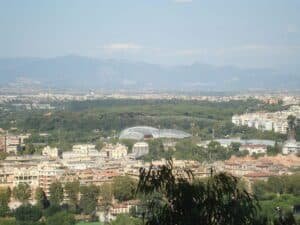
The Auditorium occupies about 55,000 square meters between Villa Glori, the Villaggio Olimpico and the corso di Francia viaduct: a part of modern Rome with a lot of greenery.
MAXXI
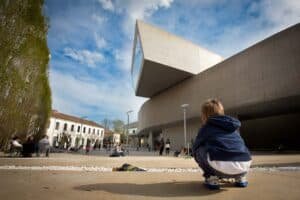
A few minutes away, near the Flaminia/Reni stop, is MAXXI, the national museum of 21st-century arts, toward the Tiber the Teatro Olimpico. The page on the Auditorium Parco della Musica gathers the history of the complex.
The Tiber
The Ponte della Musica, a pedestrian footbridge, links the neighborhood to the Foro Italico. Farther north is Ponte Milvio.
Toward the center
Tram 2 takes you back to piazzale Flaminio and piazza del Popolo, gateway to the historic center and starting point for Villa Borghese.
Where to eat before or after the show
Inside the Auditorium there are a bar and a café in the foyer, a restaurant bar with street access and a large bookstore.
In the neighborhood
Between the Villaggio Olimpico, via Flaminia and piazza Mancini there are neighborhood pizzerias and trattorias. To dine before an 8 p.m. show it's best to book around 6:30 p.m.
Afterward
Ponte Milvio has the widest offer for a late dinner, even on a Monday. In Christmas week booking is nearly obligatory.
Accessibility, age and practical information
The Auditorium is a modern complex, with routes between the halls that are also outdoors. For accessibility needs in the Sala Santa Cecilia it's best to write in advance to the Fondazione Musica per Roma, at the address info@musicaperroma.it published on the official website.
Parking
The complex's paid parking has spaces reserved for people with disabilities.
Students and teens
The rules provide that minors under 16 enter with an adult holding a ticket, in a ratio of one adult for every two minors. For a high schooler who has read M. or studies the 20th century, the show can be a living complement to the history lesson.
A Monday before Christmas
On December 21 Rome is in the thick of the holidays, with schools closing and the center crowded. For the season's other events there is the page devoted to Christmas in Rome.
Weather
December evenings are cool and damp, and the stretch from the tram to the Auditorium is outdoors: a coat to leave at the coat check and a folding umbrella.
A gift
A ticket for Democrazia, perhaps together with one of the M volumes, is a gift idea for those who love history and literature.
An idea for the day
Those coming from out of town can devote the afternoon to MAXXI, a few minutes from the Auditorium, or to a walk between piazza del Popolo and the Pincio, and then take tram 2 toward the show. A December Monday is also a good day to avoid the weekend crowds in the center's streets, before a demanding evening in the hall.
Frequently asked questions about Antonio Scurati at the Auditorium
When does Antonio Scurati's Democrazia play in Rome?
Antonio Scurati's Democrazia: storie di donne e uomini plays in Rome on Monday, December 21, 2026 at 8:00 p.m., in the Sala Santa Cecilia of the Auditorium Parco della Musica Ennio Morricone, at viale Pietro de Coubertin 30. It's a one-off date.
How much do tickets for Antonio Scurati at the Auditorium cost?
Tickets for Antonio Scurati's Democrazia at the Auditorium Parco della Musica start at 34.50 euros, according to the event's official page. They are bought from the venue's website, which links to the authorized presale circuit, or at the complex's box office.
What is the show Democrazia about?
Democrazia: storie di donne e uomini gives voice to women and men who, in different eras, fought to win and defend democracy and civil rights in Europe. The show alternates monologues and choral tableaux, with music composed and performed live.
Who is on stage with Antonio Scurati?
In Democrazia the narrating voices are Antonio Scurati and Benedetta Cimatti, the music is composed and performed live by Rodrigo D'Erasmo, violinist of Afterhours, and Mario Conte. The direction is by Lorenzo Scurati.
Who is Antonio Scurati?
Antonio Scurati is a writer and journalist born in Naples in 1969, author of the M pentalogy on Mussolini and Fascism. With M. Il figlio del secolo he won the 2019 Strega Prize, with Il sopravvissuto the 2005 Campiello, he teaches at IULM University in Milan.
How many seats does the Sala Santa Cecilia have?
The Sala Santa Cecilia of the Auditorium Parco della Musica has about 2,750 seats and is the largest of Renzo Piano's complex. It was inaugurated on December 21, 2002 and is home to the symphonic season of the Accademia Nazionale di Santa Cecilia.
How do you get to the Auditorium Parco della Musica by public transport?
The Auditorium Parco della Musica is reached by Metro A to Flaminio and then tram 2, stops Flaminia/Reni or Apollodoro. From Termini there is bus 910 without changes, lines 53, 982 and 168 also run nearby.
Can you enter the hall after the show has started?
The Auditorium Parco della Musica's rules allow entry up to five minutes before the start, once the show has started the staff may seat latecomers in seats different from those purchased. For Democrazia, at 8 p.m. in the Sala Santa Cecilia, it's best to arrive by 7:30 p.m.
Final advice on Antonio Scurati at the Auditorium
The writer who told in five volumes the birth and fall of a dictatorship takes the stage to tell of those who defended democracy, with two live musicians, in Rome's largest hall, on the day that hall turns 24. In our view it is one of the most significant civic events of the Roman December. The advice is to buy a central stalls seat early, reread a few pages of M. in the preceding days and arrive at the Auditorium by 7:30 p.m., because a full Sala Santa Cecilia takes time to enter.
Article written by the editorial team of Tour Leader Pro, contact them for Private/Corporate/V.I.P. Tours and Experiences.
Planning a trip to Rome? The English-language guides to visiting the city are on ItalyPlanner.com.
Contact Information
Nearby
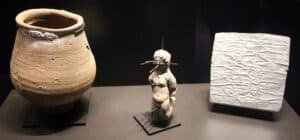
 Museum of Musical Instruments (MUSA)100 m
- Auditorium Parco della Musica100 m
- Villa Glori500 m
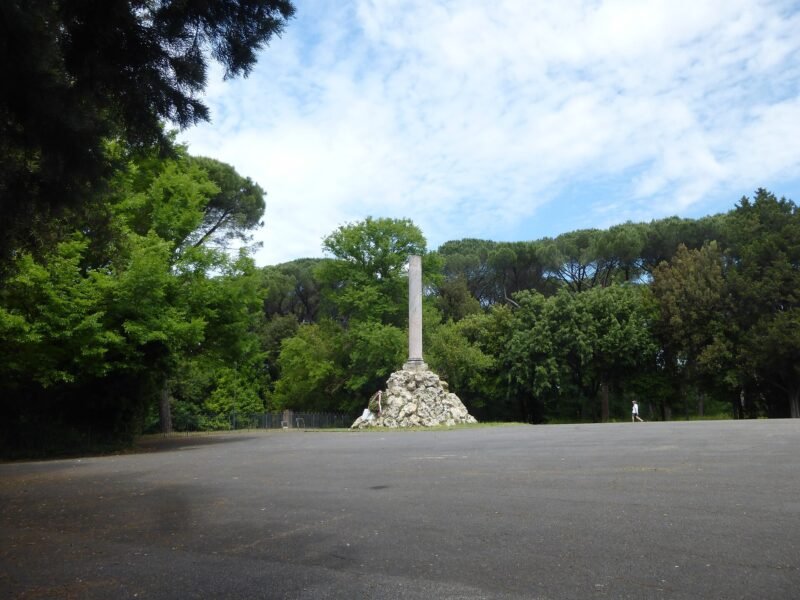
- Fountain of Anna Perenna500 m
- MAXXI – National Museum of 21st Century Arts700 m
- Flaminio700 m
Upcoming events nearby
- Roma Jazz Festival 2026, November 1 to 24 at the Auditorium and Casa del Jazz100 m
- Roma Gospel Festival 2026 at Auditorium Parco della Musica, December 13, 2026 to January 1, 2027100 m
- Santa Cecilia 2026/2027 Concert Season at Auditorium Parco della Musica, October 21, 2026 to June 5, 2027100 m
- Gaia Banfi, L’ultima Maccaia at Auditorium Parco della Musica, November 15, 2026100 m




You might also like
- Ghemon in La prima volta, l’ultima volta, l’unica volta at Auditorium Parco della Musica, April 19, 2027
- Alessandro Bergonzoni Arrivano i Dunque at Teatro Olimpico, February 20 and 21, 2027
- Back To Hawkins at Teatro Olimpico, February 17, 2027
- Selene Calloni Williams: Tu sei la Foresta at Teatro Olimpico in Rome, February 16, 2027
- Raul Cremona Bravissssssimo! at Teatro Olimpico, February 9, 2027
- Gianrico Carofiglio, Il mistero della stupidità at Teatro Olimpico, February 8, 2027